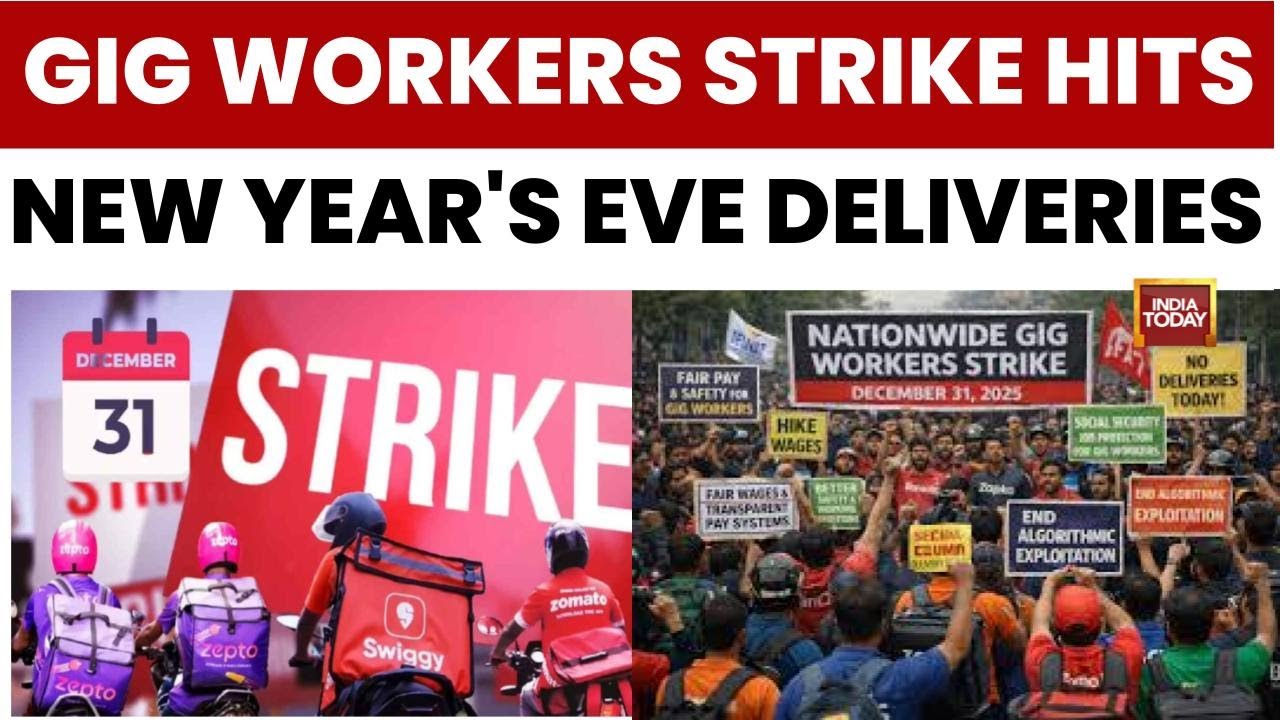
New Year’s Eve Deliveries at Risk as Gig Workers Call Nationwide Strike
New Year’s Eve celebrations across India may face disruptions tonight as gig workers from major food delivery, grocery, and e-commerce platforms have announced a nationwide strike on one of the busiest delivery days of the year.
Delivery executives associated with platforms such as Zomato, Swiggy, Blinkit, Zepto, Amazon, and Flipkart have logged off their apps to protest declining pay, rising workloads, and the lack of job security. Workers’ unions say gig workers are being pushed to work longer hours while earning less, with little protection or social security.
The strike is expected to impact food deliveries, grocery orders, and last-minute shopping in major cities including Delhi, Bengaluru, Hyderabad, Kolkata, and Pune, potentially affecting New Year Eve plans for millions of customers.
As households prepare to welcome the new year, the protest has turned New Year’s Eve into a flashpoint for India’s growing gig economy.
Why Are Gig Workers Protesting?
Gig worker unions say their demands are long-standing and have been ignored for years. According to workers, the pressure has intensified due to rapid delivery promises and shrinking incentives.
Key Demands of Gig Workers
1. Fair and Transparent Pay Structure
Gig workers are demanding a clear and fair pay system. They claim they are working over 10 hours a day while their earnings continue to decline. Many say payments do not reflect the actual time and effort put in.
2. End Unsafe 10-Minute Delivery Targets
Workers want platforms to scrap the popular 10-minute delivery model. While it helped apps grow quickly, gig workers say it puts their lives at risk by forcing them to rush under unsafe conditions.
3. Coverage Under Labour Laws
Gig workers are demanding legal recognition under existing labour laws. They say this is necessary to prevent exploitation, excessive working hours, and unfair pay practices.
4. Social Security and Insurance Protection
With frequent road accidents reported during high-speed deliveries, workers are demanding health insurance, accident coverage, and basic social security benefits.
The Numbers Behind the Protest
The scale of the issue becomes clearer when looking at recent data:
-
In 2020–21, India had around 77 lakh gig workers
-
By 2029–30, the number is expected to rise to 2.35 crore
-
75% of gig workers work more than 10 hours a day
-
41% do not get weekly holidays
-
42% report facing violence at work
-
32% earn only ₹400–₹600 per day, despite long working hours
Workers say long shifts, low pay, no weekly breaks, and workplace safety concerns have pushed them to protest.
Will New Year’s Eve Be Seriously Affected?
According to labour experts and union leaders, the impact of the strike may vary by region.
In Delhi NCR and parts of North India, the disruption may be limited due to weaker union presence. However, in southern cities like Hyderabad and Bengaluru, where gig worker associations are stronger, services could be hit harder.
Food delivery delays, long wait times, and the suspension of quick-commerce services are likely in several cities. Customers should expect slower deliveries and limited availability, especially during peak New Year Eve hours.
Longstanding Concerns Still Unresolved
Gig workers say they have repeatedly approached the central government and labour ministry, demanding minimum pay, job security, and basic workplace facilities. Reports have highlighted that many workers lack access to restrooms, phone charging points, or safe resting areas during long shifts.
Unions are also demanding a minimum monthly income of ₹40,000 and an increase in per-kilometre pay to ₹20 per km.
What This Means for Consumers
As the strike continues, New Year’s Eve deliveries may be delayed or unavailable in several parts of the country. The popular 10-minute delivery promise is unlikely to hold tonight.
While celebrations go on, gig workers say they are fighting for dignity, safety, and fair compensation—issues they believe are critical to the future of India’s digital economy.